
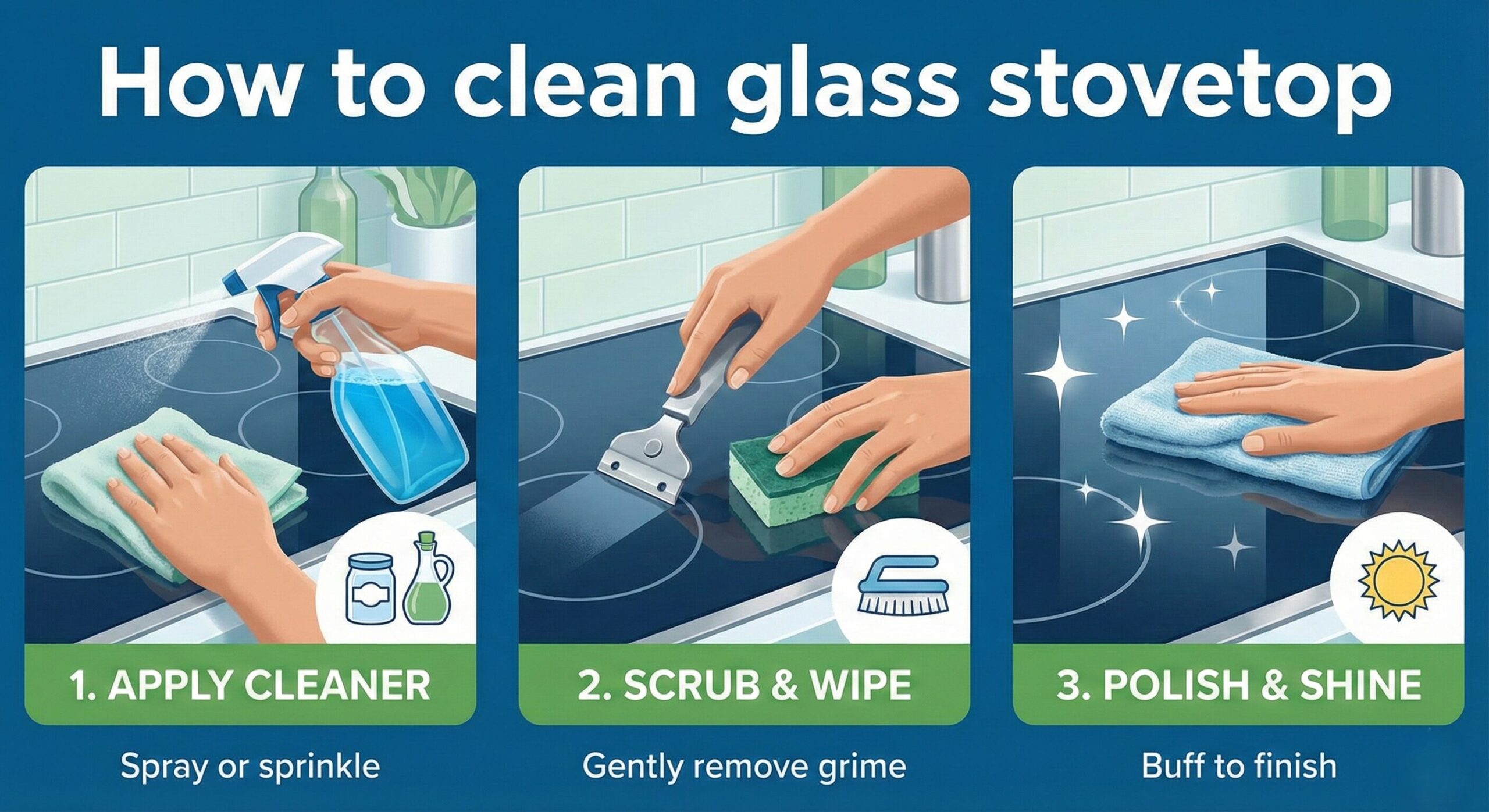
How to Clean Glass Stovetop: The Complete Step-by-Step Guide
A glass stovetop can instantly elevate the look of your kitchen—sleek, modern, and easy to wipe down. But spills, grease splatters, and stubborn burnt-on food can quickly ruin its shine. If you’re wondering how to clean a glass stovetop properly without scratching or damaging it, this complete guide is for you.
Table of Contents
- What Is a Glass Stovetop?
- Why Proper Cleaning Matters
- What You’ll Need to Clean a Glass Stovetop
- How to Clean a Glass Stovetop (Daily Cleaning)
- How to Remove Burnt-On Stains
- Cleaning a Glass Stovetop with Baking Soda & Vinegar
- How to Use a Razor Scraper Safely
- Best Commercial Glass Stovetop Cleaners
- Natural & Eco-Friendly Cleaning Methods
- What NOT to Use on a Glass Stovetop
- How Often Should You Clean a Glass Stovetop?
- Tips to Keep Your Glass Stovetop Shiny Longer
- Common Mistakes to Avoid
- Frequently Asked Questions (FAQ)
- Final Thoughts
1. What Is a Glass Stovetop?
A glass stovetop—also known as a ceramic cooktop—is a smooth cooking surface made from tempered ceramic glass. It heats through electric coils or induction technology beneath the surface, providing even heat and a modern appearance.
While durable, glass stovetops require gentle care to prevent scratches, cloudiness, or cracks.
2. Why Proper Cleaning Matters
Learning how to clean a glass stovetop correctly isn’t just about looks. Proper cleaning:
- Prevents permanent stains and discoloration
- Maintains heating efficiency
- Extends the lifespan of your cooktop
- Avoids scratches that trap dirt
- Keeps your kitchen hygienic and odor-free
Burnt spills left too long can become nearly impossible to remove later—regular cleaning saves time and effort.
3. What You’ll Need to Clean a Glass Stovetop
Before you begin, gather these safe and effective tools:
Basic Cleaning Supplies
- Microfiber cloth or soft sponge
- Warm water
- Dishwashing liquid
For Deep Cleaning
- Baking soda
- White vinegar
- Paper towels
- Glass stovetop cleaner (optional)
- Razor blade scraper (cooktop-safe)
❗ Always ensure the stovetop is completely cool before cleaning.
4. How to Clean a Glass Stovetop (Daily Cleaning)
Daily cleaning prevents buildup and keeps your stovetop looking brand new.
Step-by-Step Daily Cleaning
- Wait until the stovetop cools down
- Mix warm water + a few drops of dish soap
- Dip a soft cloth or sponge into the solution
- Gently wipe the entire surface
- Rinse with clean water
- Dry with a microfiber cloth to prevent streaks
✅ This method is ideal for light spills, oil splashes, and dust.
5. How to Remove Burnt-On Stains from a Glass Stovetop
Burnt food and sugar spills are the biggest challenges when cleaning a glass stovetop.
Method for Burnt Stains
- Sprinkle baking soda generously over the stain
- Spray or drizzle white vinegar over the baking soda
- Cover with a warm, damp towel
- Let it sit for 15–20 minutes
- Gently wipe away residue
- Repeat if necessary
This loosens burnt food without scratching the surface.
6. Cleaning a Glass Stovetop with Baking Soda & Vinegar
This is one of the most popular and safest natural methods.
Why It Works
- Baking soda = mild abrasive (scratch-safe)
- Vinegar = dissolves grease and mineral deposits
Instructions
- Lightly wet the stovetop
- Sprinkle baking soda evenly
- Spray vinegar until it foams
- Let sit for 10–15 minutes
- Wipe clean using circular motions
- Dry and buff with microfiber cloth
✨ Result: a streak-free, shiny glass stovetop.
7. How to Use a Razor Scraper Safely
For extremely stubborn burnt-on residue, a razor scraper is effective—but must be used carefully.
Safe Razor Scraping Tips
- Use only a cooktop-approved razor scraper
- Hold blade at a 45-degree angle
- Gently push—not dig—into residue
- Never scrape a dry surface (use cleaner first)
- Wipe clean immediately after scraping
⚠️ Never use knives or metal tools not designed for glass cooktops.
8. Best Commercial Glass Stovetop Cleaners
If you prefer store-bought options, glass stovetop cleaners are specially formulated for ceramic surfaces.
What to Look For
- Non-abrasive formula
- Designed for ceramic or glass cooktops
- Leaves a protective shine
Use as directed and always wipe off residue to prevent haze.
9. Natural & Eco-Friendly Cleaning Methods
If you prefer chemical-free cleaning, these methods work well:
Lemon Juice
- Cuts grease naturally
- Leaves a fresh scent
White Vinegar
- Removes streaks and mineral buildup
Baking Soda Paste
- Gentle scrubbing without scratching
These are safe for homes with kids and pets.
10. What NOT to Use on a Glass Stovetop
Avoid these at all costs:
❌ Steel wool
❌ Abrasive scouring pads
❌ Powder cleaners
❌ Bleach or ammonia
❌ Oven cleaners
❌ Harsh chemical sprays
Using these can permanently scratch or cloud the surface.
11. How Often Should You Clean a Glass Stovetop?
- Daily: Light wipe after cooking
- Weekly: Deep clean with baking soda or cleaner
- Monthly: Inspect and remove stubborn buildup
Consistency is the secret to easy maintenance.
12. Tips to Keep Your Glass Stovetop Shiny Longer
- Wipe spills immediately after cooling
- Avoid dragging heavy pots across the surface
- Use flat-bottom cookware
- Clean sugar spills right away (they harden fast)
- Buff with microfiber cloth after cleaning
13. Common Mistakes to Avoid
- Cleaning while the surface is hot
- Using rough sponges
- Skipping drying (causes streaks)
- Letting burnt spills sit overnight
- Using too much cleaner
14. Frequently Asked Questions (FAQ)
Can I use vinegar every day?
Yes, diluted vinegar is safe for regular use.
Will baking soda scratch my glass stovetop?
No, baking soda is mildly abrasive and safe when used gently.
How do I remove white haze?
Use vinegar or a dedicated glass cooktop cleaner and buff dry.
Is a razor blade safe?
Yes, when used carefully and only on tough residue.
15. Final Thoughts
Knowing how to clean a glass stovetop properly makes kitchen maintenance faster, safer, and stress-free. With the right tools and techniques—especially baking soda, vinegar, and gentle wiping—you can keep your stovetop looking spotless and scratch-free for years.
A clean stovetop isn’t just about appearance—it’s about protecting your appliance investment and creating a healthier cooking environment.
Watch a Video – https://youtu.be/aV3_Cmf6kMk
Read More : https://www.beforewesleep.com/articles/eco-friendly-personalized-holiday-gifts/