
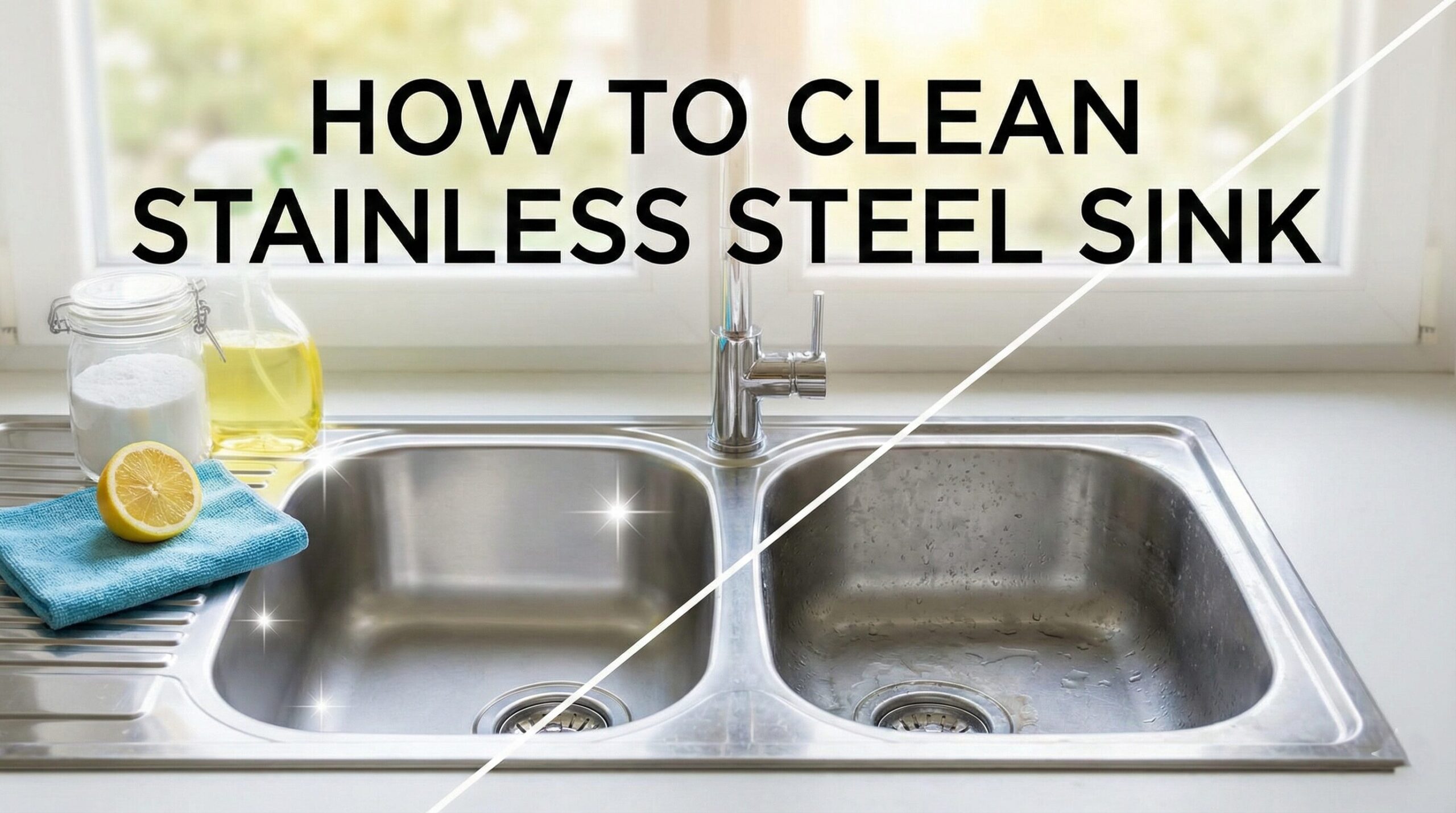
How to Clean Stainless Steel Sink (Complete Step-by-Step Guide)
A stainless steel sink is one of the most popular choices for modern kitchens because it looks sleek, lasts for years, and resists rust. However, without proper care, it can quickly lose its shine due to water spots, food residue, scratches, and stubborn stains.
Why Stainless Steel Sinks Need Proper Cleaning
Although stainless steel is durable, it’s not maintenance-free. Daily use exposes your sink to:
- Food particles
- Grease and oil
- Hard water stains
- Soap residue
- Bacteria and odors
Regular cleaning not only improves appearance but also helps maintain hygiene and prevents long-term damage.
What You’ll Need to Clean a Stainless Steel Sink
Before you start, gather these simple and affordable items:
- Dish soap
- Baking soda
- White vinegar
- Soft sponge or microfiber cloth
- Old toothbrush
- Olive oil or baby oil (for polishing)
- Paper towels
These items are safe, effective, and widely recommended for stainless steel care.
How to Clean a Stainless Steel Sink Daily
Daily cleaning prevents buildup and keeps your sink fresh.
Step 1: Rinse the Sink
Rinse the entire sink with warm water to remove loose food particles and debris.
Step 2: Apply Dish Soap
Add a few drops of dish soap to a soft sponge. Gently scrub the sink surface.
Step 3: Scrub Along the Grain
Always scrub in the direction of the grain. This prevents scratches and keeps the surface smooth.
Step 4: Rinse and Dry
Rinse thoroughly and dry with a microfiber cloth to avoid water spots.
Pro Tip: Drying the sink after each use is the easiest way to maintain shine.
Deep Cleaning a Stainless Steel Sink (Weekly Method)
When your sink starts looking dull or stained, it’s time for a deeper clean.
Step 1: Sprinkle Baking Soda
Lightly coat the sink with baking soda. It works as a gentle abrasive without scratching.
Step 2: Scrub Gently
Using a damp sponge, scrub the sink following the grain pattern.
Step 3: Spray Vinegar
Spray white vinegar over the baking soda. Let it fizz for 5–10 minutes to break down stains.
Step 4: Rinse Thoroughly
Wash away all residue with warm water.
Step 5: Dry Completely
Use a clean cloth to dry the surface and prevent water marks.
How to Remove Hard Water Stains from a Stainless Steel Sink
Hard water stains leave white or cloudy marks that reduce shine.
Method:
- Soak a paper towel in white vinegar
- Place it over stained areas
- Leave for 15–20 minutes
- Scrub gently and rinse
Repeat if necessary. Dry immediately for best results.
How to Remove Rust Stains from Stainless Steel Sinks
Even stainless steel can develop rust under certain conditions.
Safe Rust Removal Method
- Sprinkle baking soda over rust spots
- Add a few drops of water to make a paste
- Gently scrub with a soft toothbrush
- Rinse and dry
Avoid steel wool, as it can worsen rust issues.
How to Polish a Stainless Steel Sink
Polishing restores shine and adds a protective layer.
Steps to Polish
- Add a few drops of olive oil to a soft cloth
- Rub gently along the grain
- Buff with a dry cloth
This step makes your sink look brand new and repels water.
What NOT to Use on a Stainless Steel Sink
Using the wrong products can permanently damage your sink.
❌ Steel wool or wire brushes
❌ Bleach (undiluted)
❌ Abrasive cleaners
❌ Ammonia-based products
Always choose gentle, non-abrasive cleaners.
Natural vs Commercial Stainless Steel Cleaners
Natural Cleaners
Pros:
- Eco-friendly
- Affordable
- Safe for daily use
Cons:
- May require more effort for tough stains
Commercial Cleaners
Pros:
- Fast and effective
- Designed for tough stains
Cons:
- More expensive
- May contain harsh chemicals
For most homes, natural cleaning methods are more than sufficient.
How Often Should You Clean a Stainless Steel Sink?
- Daily: Light cleaning with dish soap
- Weekly: Deep cleaning with baking soda and vinegar
- Monthly: Polishing for extra shine
Consistency is the key to a long-lasting sink.
Tips to Keep Your Stainless Steel Sink Looking New
- Always dry after use
- Avoid leaving wet sponges in the sink
- Don’t leave acidic foods (lemon, vinegar) for long
- Clean spills immediately
- Use a sink grid to prevent scratches
Common Mistakes People Make When Cleaning Stainless Steel Sinks
- Scrubbing against the grain
- Using harsh chemicals
- Skipping drying after washing
- Letting stains sit too long
Avoiding these mistakes will extend the life of your sink.
Frequently Asked Questions (FAQ)
Can I use vinegar every day on a stainless steel sink?
Yes, but rinse thoroughly and dry to prevent dullness over time.
Is baking soda safe for stainless steel?
Absolutely. Baking soda is non-abrasive and ideal for deep cleaning.
Why does my stainless steel sink look cloudy?
Cloudiness usually comes from hard water deposits or soap residue.
How do I make my sink shine like new?
Deep clean with baking soda and vinegar, then polish with olive oil.
Final Thoughts: The Best Way to Clean a Stainless Steel Sink
Learning how to clean a stainless steel sink properly doesn’t require expensive products or professional cleaners. With simple household items like baking soda, vinegar, and dish soap, you can maintain a spotless, shiny, and hygienic sink every day.
By following the methods outlined in this guide, your stainless steel sink will remain a beautiful centerpiece in your kitchen for years to come.
Watch Video: https://youtu.be/9kwQ8Iar5Z0
Read More: https://www.beforewesleep.com/articles/eco-friendly-personalized-holiday-gifts/