
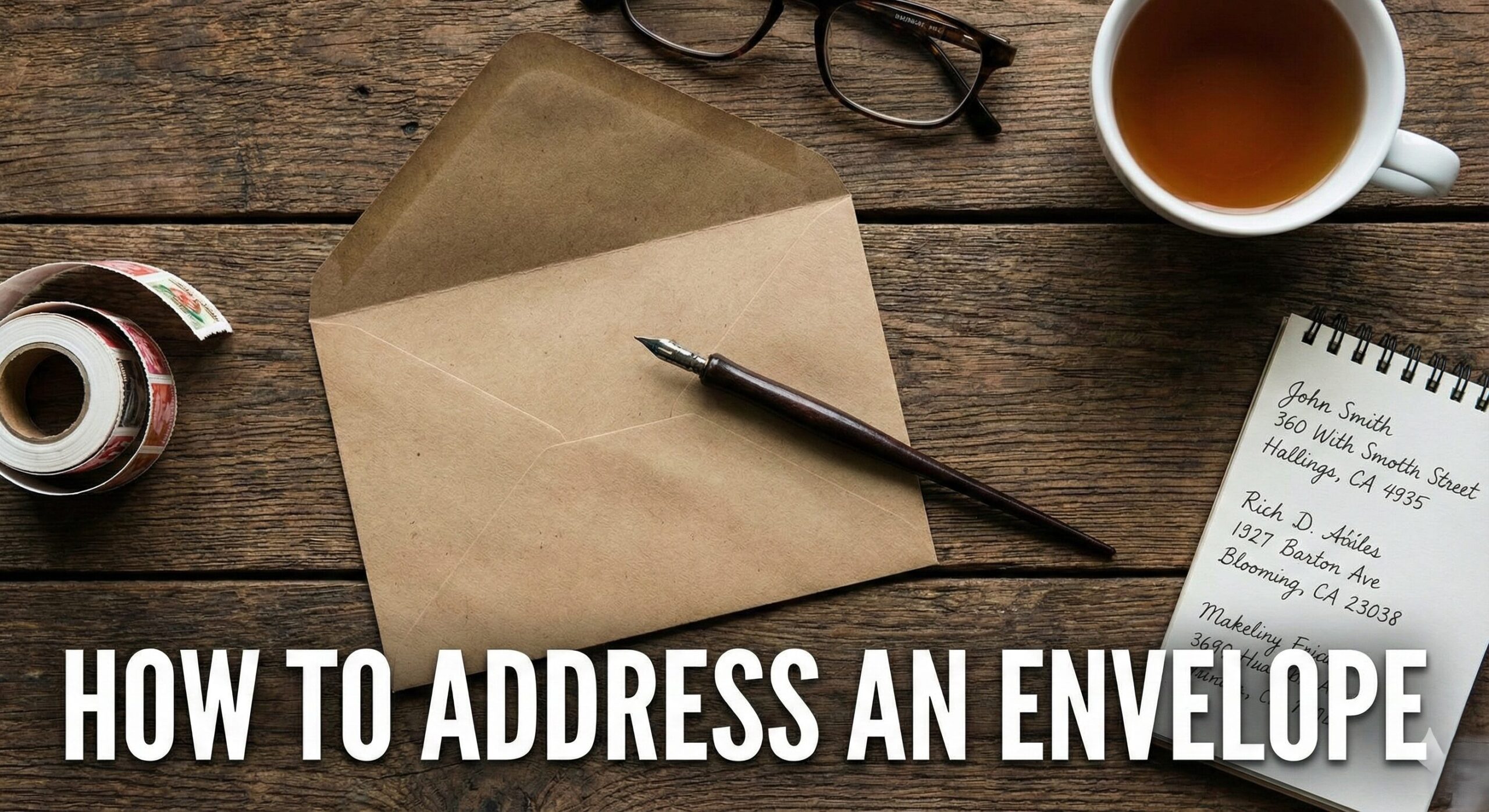
How to Address an Envelope Correctly: A Complete Step-by-Step Guide
Knowing how to address an envelope correctly is an essential life skill that many people overlook in the digital age. However, physical mail is still widely used for official documents, job applications, invitations, legal notices, greeting cards, and business correspondence. Addressing an envelope properly ensures your mail reaches the intended recipient without delays, returns, or confusion.
This comprehensive guide explains everything you need to know about addressing an envelope—whether it’s for personal, business, or international mail.
Why Correct Envelope Addressing Matters
Addressing an envelope correctly is not just about neat handwriting. Postal services rely on standardized formats and clear placement to sort and deliver mail efficiently. Incorrect or unclear addressing can result in:
- Delayed delivery
- Returned mail
- Lost documents
- Missed deadlines
Using the correct structure helps both automated sorting machines and postal workers read the address accurately.
Basic Parts of an Envelope
Before writing, it’s important to understand the three key components of a properly addressed envelope:
- Recipient’s Address
- Return Address
- Postage Stamp
Each element has a specific position and purpose.
How to Write the Recipient’s Address
The recipient’s address is the most important part of the envelope and should be written clearly and accurately.
Placement
- Write the recipient’s address in the center of the envelope
- Align text to the left
- Leave enough space between lines for easy reading
Standard Address Format
A typical mailing address should be written in this order:
- Recipient’s Full Name
- Street Address or P.O. Box
- City, State/Province, ZIP or Postal Code
- Country Name (for international mail)
Example:
Mr. John Smith
123 Maple Street
Springfield, IL 62704
For formal or professional mail, always use titles such as Mr., Ms., Dr., or Mrs. when appropriate.
How to Address an Envelope for Business Mail
Business correspondence requires a more formal approach.
Business Address Example:
Ms. Sarah Johnson
Human Resources Manager
ABC Solutions Ltd.
456 Corporate Avenue
London SW1A 1AA
United Kingdom
Tips for Business Envelopes:
- Include job titles if relevant
- Use company names clearly
- Avoid abbreviations unless standard
- Use block letters or professional handwriting
Correct formatting creates a positive first impression before the envelope is even opened.
How to Add the Return Address
The return address ensures your mail can be returned if it cannot be delivered.
Placement
- Write the return address in the top-left corner of the envelope
- Use smaller text than the recipient’s address
Return Address Format:
Your Full Name
Your Street Address
City, State, ZIP Code
While optional for casual mail, a return address is strongly recommended for official, legal, or valuable documents.
Where to Place the Stamp
The postage stamp must be placed in the top-right corner of the envelope.
Important Stamp Tips:
- Use the correct postage based on weight and destination
- International mail requires different postage
- Do not overlap stamps or place them elsewhere
Incorrect postage can result in returned or delayed mail.
How to Address an Envelope for International Mail
Sending mail overseas requires extra care.
International Address Rules:
- Write the destination country in capital letters
- Use the destination country’s postal format when possible
- Avoid abbreviations
Example:
Maria Gonzalez
Calle Mayor 15
28013 Madrid
SPAIN
Including the country name clearly helps international postal systems route the mail correctly.
Handwriting vs Printed Labels
Both handwriting and printed labels are acceptable, but clarity is key.
Handwriting Tips:
- Use dark ink (black or blue)
- Write in block letters
- Avoid cursive writing
- Keep spacing consistent
Printed Label Tips:
- Use simple fonts (Arial, Times New Roman)
- Avoid decorative fonts
- Ensure labels are straight and securely attached
For business mail, printed labels often look more professional.
Common Mistakes to Avoid
Even small errors can cause delivery problems. Avoid these common mistakes:
- Misspelled names or street names
- Incorrect postal codes
- Missing apartment or unit numbers
- Writing too close to the envelope edges
- Using pencil or light-colored ink
Always double-check the address before mailing.
How to Address Special Types of Mail
Formal Invitations
Use full names and titles:
Mr. and Mrs. David Brown
Legal or Official Documents
Include department names and reference numbers if required.
Care Of (C/O) Address
Used when sending mail to someone at another person’s address:
Emily Clark
c/o Robert Clark
789 Oak Lane
Denver, CO 80203
Envelope Size and Orientation
The envelope size should match the contents.
- Standard letters: Rectangular envelopes
- Documents: Large flat envelopes
- Cards: Invitation envelopes
Always write addresses parallel to the longest side of the envelope.
Final Checklist Before Sending
Before dropping your mail in the mailbox, confirm:
- Address is complete and accurate
- Writing is clear and readable
- Stamp is correct and properly placed
- Envelope is sealed securely
Taking a moment to review can prevent costly mistakes.
Conclusion
Learning how to address an envelope correctly is a simple but valuable skill that ensures your mail arrives safely and on time. Whether you are sending a personal letter, business document, or international package, following proper formatting and placement rules makes a big difference.
By using clear writing, accurate information, and correct positioning, you can confidently send mail without worrying about delays or returns. Even in a digital world, mastering the basics of traditional communication remains an important part of everyday life.
https://www.youtube.com/embed/DLHEHqgA0_M
Read More : https://www.beforewesleep.com/articles/eco-friendly-personalized-holiday-gifts/