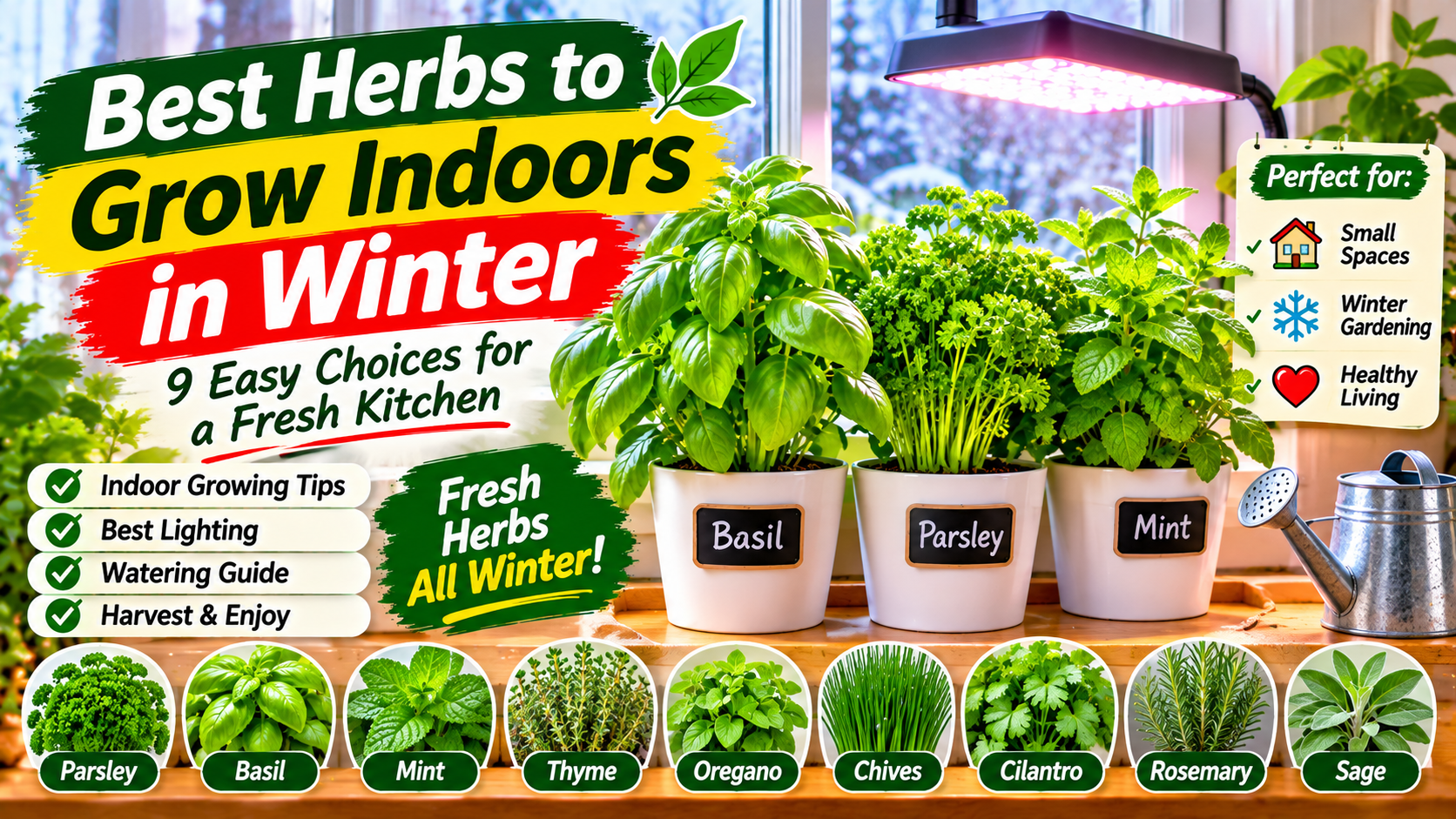
Best Herbs to Grow Indoors in Winter: 9 Easy Choices
Best Herbs to Grow Indoors in Winter: 9 Easy Choices for a Fresh Kitchen
Keep a little kitchen garden going through the colder months. Discover which herbs adapt best to indoor pots, how much light they need, when to water, and how to harvest without weakening the plants.
Short days and cold weather do not have to end your herb-growing season. With a bright window, containers that drain properly, and a little attention to watering, you can harvest fresh leaves indoors throughout winter. The trick is choosing herbs that tolerate indoor conditions and matching each plant to the light and moisture it prefers.
For most homes, parsley, mint, chives, thyme, oregano, and basil are useful starting choices. However, they do not all behave the same way: basil needs warmth, while woody herbs such as thyme and oregano prefer a potting mix that dries slightly between waterings. Therefore, it is better to grow them in separate pots than to crowd every herb into one planter.
1. The 9 Best Herbs to Grow Indoors in Winter
These herbs are practical choices for a windowsill or small indoor shelf. Nevertheless, success depends on your room temperature, available light, and whether you start with a healthy nursery plant or grow from seed.
1. Parsley
Good beginner choiceModerate lightCurly and flat-leaf parsley both work well in containers. Parsley grows more slowly than some quick herbs, but it gives you a steady supply of leaves once established.
Care: Provide bright light and keep the mix lightly moist, never waterlogged. Use a pot deep enough for its root system and harvest outer stems first.
2. Chives
Compact growthBeginner friendlyChives are tidy, compact, and useful in small kitchens. Their narrow leaves can be snipped as needed, and an established clump can keep producing new growth.
Care: Give chives a bright spot and water when the top layer begins to dry. Cut leaves a little above the base rather than pulling them out.
3. Mint
Easy to growKeep in its own potSpearmint and peppermint are vigorous growers and often adapt well to indoor containers. Their spreading roots make them better suited to individual pots than mixed herb planters.
Care: Provide bright, indirect to moderate direct light and more consistent moisture than you would give thyme or rosemary. Do not leave the pot standing in water.
4. Basil
Needs warmthNeeds strong lightBasil can produce fresh leaves indoors during winter, but it is sensitive to cold. Keep it away from chilly glass, drafty doors, and cold night temperatures.
Care: Give basil the brightest warm position available. Water when the surface begins to dry, and pinch the growing tips to encourage branching. Avoid chilling it below about 50°F (10°C).
5. Thyme
Woody herbAllow dryingThyme is compact, aromatic, and useful in small pots. It generally prefers stronger light and a free-draining growing medium rather than persistently moist soil.
Care: Place it in a sunny window or under a grow light. Let the upper part of the potting mix dry before watering again, and avoid heavy feeding.
6. Oregano
Good for cookingDry between wateringOregano can grow indoors in a bright position and is a useful choice for pasta, vegetables, and sauces. It tends to become leggy when light is insufficient.
Care: Use a draining potting mix, provide strong light, and water after the mix has started to dry. Trim the tips to keep the plant bushy.
7. Cilantro (Coriander)
Quick kitchen cropCooler conditionsCilantro is worth sowing in small batches because it can grow quickly but may bolt as conditions become warm or stressful. Succession sowing helps keep young leaves available.
Care: Use a deeper pot, keep the mix evenly moist, and give it bright light. Sow a fresh small batch every few weeks rather than relying on one older plant.
8. Rosemary
Needs strong lightGood drainageRosemary can be grown indoors, although it is more demanding than parsley or mint. It needs a bright position, good air movement, and a mix that does not stay wet.
Care: Choose a sunny window or supplemental grow light. Let the mix dry somewhat between waterings, but do not allow the root ball to remain bone dry for long periods.
9. Sage
Perennial herbBright lightCommon sage can live in a container for years when given enough light and well-drained soil. Its leaves are useful for winter cooking, especially with roasted vegetables and beans.
Care: Give sage plenty of light and allow the mix to dry between waterings. Avoid overwatering and trim lightly to maintain a compact shape.
2. Quick Comparison: Which Winter Herb Should You Choose?
Use this table to narrow down your choices. These are general indoor-growing tendencies rather than fixed schedules; check the potting mix and the plant itself before watering.
| Herb | Light preference | Watering tendency | Indoor difficulty |
|---|---|---|---|
| Parsley | Bright light | Evenly moist, not soggy | Easy to moderate |
| Chives | Bright light | Moderate moisture | Easy |
| Mint | Bright, indirect to moderate sun | More consistent moisture | Easy |
| Basil | Very bright light | Moderate; avoid drying out completely | Moderate; needs warmth |
| Thyme | Strong light | Allow mix to dry somewhat | Moderate |
| Oregano | Strong light | Allow mix to dry somewhat | Moderate |
| Cilantro | Bright light | Evenly moist, not soggy | Easy to moderate |
| Rosemary | Very bright light | Allow some drying; excellent drainage | More challenging |
| Sage | Strong light | Allow mix to dry between watering | Moderate |
3. How to Set Up an Indoor Winter Herb Garden
You do not need a greenhouse or a large kitchen to grow herbs indoors. In fact, a small group of separate pots is often easier to manage than one large mixed planter because each herb can receive the conditions it prefers.
Use clean containers with holes in the base. Place a saucer underneath to catch runoff, then empty it after watering so the roots do not sit in standing water.
A general-purpose soilless potting mix works for many culinary herbs. For extra drainage, a mix of about two parts potting medium to one part perlite is one extension-recommended option. Do not use dense garden soil in small indoor pots.
Place mint and parsley together if that makes watering easier. Keep rosemary, thyme, sage, and oregano in a separate group because they prefer a drier mix between waterings.
Small nursery pots are a quick option. Alternatively, sow annual herbs such as basil and cilantro in small batches so that younger plants are ready as older ones slow down.
A bright window or a shelf under a grow light makes it easier to check leaf colour, moisture, and pests. Rotate the pots regularly if light reaches them mainly from one direction.
4. Light and Temperature: The Two Biggest Winter Challenges
Give herbs enough light
Light is often the biggest limitation when growing herbs indoors during winter. A south- or west-facing window may provide several hours of direct sun, but short days, cloudy weather, window obstructions, and cold glass can reduce the light that reaches the leaves.
Where natural light is insufficient, use a full-spectrum LED grow light. Many extension guides suggest running supplemental lighting for approximately 12–16 hours a day, depending on the fixture and the amount of daylight available. Follow the light manufacturer’s distance guidance, use a timer, and give plants a dark period each day.
If stems become long and weak or leaves become small and pale, the plants may need more light. Move the light closer within its safe operating distance or improve the window position. However, avoid placing foliage so close that it becomes hot or scorched.
Keep tender herbs away from cold windows
Most indoor herbs are comfortable in ordinary room conditions, but basil is especially sensitive to cold. Keep it in a warm area and away from chilly window panes or drafts. Also, keep all pots away from radiators and heating vents, which can dry foliage and potting mix unevenly.
5. Watering and Feeding Herbs in Winter
Indoor herbs often use water more slowly during winter because light levels and growth rates are lower. Therefore, do not follow a rigid daily watering schedule. Instead, check the potting mix with your finger and water according to the needs of each plant.
Match watering to the type of herb
- Soft-leaved herbs: Parsley, cilantro, basil, and chives generally prefer more consistent moisture, although their roots still need air and should never sit in waterlogged soil.
- Woody herbs: Thyme, oregano, rosemary, and sage usually prefer the mix to dry somewhat before they are watered again.
- Mint: Mint generally needs more regular moisture than rosemary or thyme, but its pot must still drain freely.
When you water, moisten the root ball thoroughly and let excess water drain into the saucer. Afterward, empty the saucer. Room-temperature water is a sensible choice, especially when the plants are near a cool window.
Do indoor herbs need fertilizer in winter?
Herbs usually need less fertilizer than many ornamental houseplants. If growth is slow because of low light, adding extra fertilizer will not fix the underlying problem. First improve the light and check the roots and watering routine. If a plant is actively producing new growth, use a balanced fertilizer at a diluted rate according to its label. Avoid heavy feeding during a period of slow growth.
6. How to Harvest Indoor Herbs Without Weakening Them
Regular, careful harvesting encourages many herbs to branch and remain compact. Use clean scissors, and avoid removing so much foliage that the plant cannot support new growth.
- Basil: Pinch or snip just above a pair of leaves to encourage side shoots. Remove flower buds if you want to keep the plant focused on leaf production.
- Parsley: Cut the outer stems near the base and leave the centre growth intact.
- Chives: Snip leaves close to the base, leaving enough plant growth to regrow.
- Mint: Pinch stem tips or cut stems above a leaf pair to encourage branching.
- Thyme and oregano: Take small sprigs regularly, but avoid cutting deeply into old woody stems.
- Rosemary and sage: Harvest lightly and avoid removing too much of the plant at once.
Because indoor growth can be slower in winter, harvest smaller amounts more often. If you use an herb frequently, keeping two small plants can provide a more reliable supply than repeatedly cutting one plant heavily.
7. Common Problems When Growing Herbs Indoors in Winter
Leggy stems and small leaves
This usually points to insufficient light. Move the pot to a brighter window or add a suitable grow light. Also rotate the containers so growth remains even.
Yellow leaves
Yellowing can result from overwatering, poor drainage, low light, nutrient issues, or normal older-leaf decline. Check the potting mix and roots before adding fertilizer. If the mix stays wet for days, improve drainage and reduce watering frequency.
White soil surface or mold
A persistently damp surface and poor air movement can encourage fungal growth. Allow the surface to dry between watering where appropriate, remove fallen leaves, increase gentle air circulation, and avoid overcrowding pots.
Small insects on leaves
Aphids and spider mites can affect indoor herbs. Inspect leaf undersides and new growth regularly. Isolate affected plants, remove heavily infested leaves, and use a plant-safe control method that is labelled for edible herbs. Follow the product label and any harvest interval instructions.
Rosemary keeps drying out or dropping leaves
Rosemary can struggle indoors when light is weak, air circulation is poor, or roots stay wet. Check that the container drains well, give it the brightest available light, and avoid placing it next to a hot vent or a cold draft.
Interactive Indoor Herb Care Picker
Choose a herb to see a quick reminder of its main winter-growing needs.
Give it bright light, a deep pot, and evenly moist but well-drained mix. Harvest outer stems first.
This picker is a general reminder. Adjust care to your room, pot size, plant age, and growing conditions.
8. A Simple Weekly Winter Herb-Garden Routine
| Routine | What to do |
|---|---|
| Twice a week | Check the potting mix with a finger and water only when the particular herb needs it. |
| Every few days | Inspect leaves for aphids, spider mites, yellowing, or signs of stress. |
| Weekly | Rotate pots, remove fallen leaves, empty saucers, and check that grow lights and timers are working. |
| As needed | Harvest lightly, pinch growing tips, and sow another small batch of basil or cilantro if you use them often. |
| Monthly | Review growth and adjust light, pot size, or feeding only when the plant’s condition calls for it. |
9. Frequently Asked Questions
What are the easiest herbs to grow indoors during winter?
Parsley, mint, chives, oregano, thyme, and basil are useful choices. Parsley, mint, and chives can be relatively forgiving, while basil needs warmth and strong light. Rosemary is possible but usually needs a brighter position and careful watering.
Can herbs grow indoors without a grow light?
Yes, if a bright window provides enough light. However, winter days are shorter and natural light may be weak. If stems become leggy or plants stop growing, a full-spectrum grow light can help.
How many hours should an indoor herb grow light stay on?
Many indoor herb-growing guides suggest roughly 12–16 hours of supplemental light per day, depending on natural sunlight and the fixture. Use a timer and provide a daily dark period.
Can I grow basil on a windowsill in winter?
Yes. Basil needs a warm, bright location and should be kept away from cold windows and drafts. If natural light is limited, use a suitable grow light.
Should I fertilize herbs during winter?
Feed sparingly, if at all, when growth is slow. First make sure the plants receive enough light. If they are actively growing, use a diluted balanced fertilizer according to the product label.
Can I grow several herbs together in one pot?
It is usually easier to grow herbs in separate containers because their light and watering needs differ. For example, mint prefers more consistent moisture than rosemary or thyme.
Why are my indoor herbs growing slowly?
Short daylight, low light intensity, cool drafts, overwatering, and a lack of nutrients during active growth can all slow herbs down. Check light first, then review temperature and root-zone moisture.
When should I harvest indoor herbs?
Harvest once the plant has enough healthy growth to spare. Take small amounts regularly, use clean scissors, and leave plenty of foliage so the plant can continue growing.
Final Thoughts
The best herbs to grow indoors in winter are the ones that match your available light, room temperature, and cooking habits. Start with a few reliable choices rather than trying to grow everything at once. For example, parsley, chives, and mint make a useful starter group, while basil, rosemary, and thyme are excellent additions when you can provide stronger light and the right watering conditions.
Most importantly, watch the plants instead of following a fixed watering calendar. With separate pots, good drainage, enough light, and light harvesting, a small indoor herb garden can keep supplying fresh flavour even when outdoor growing slows down.
Sources and Further Reading
- Iowa State University Extension – Can I grow herbs indoors over the winter?
- University of Maryland Extension – Growing Herbs in Containers and Indoors
- Penn State Extension – Growing Herbs Indoors
- Iowa State University Extension – Growing Herbs Indoors
- UC Master Gardener Program – Winter Herbs Indoors
Growing conditions vary with climate, window direction, building insulation, container size, and herb variety. Use these recommendations as a starting point and adjust based on how your plants respond.