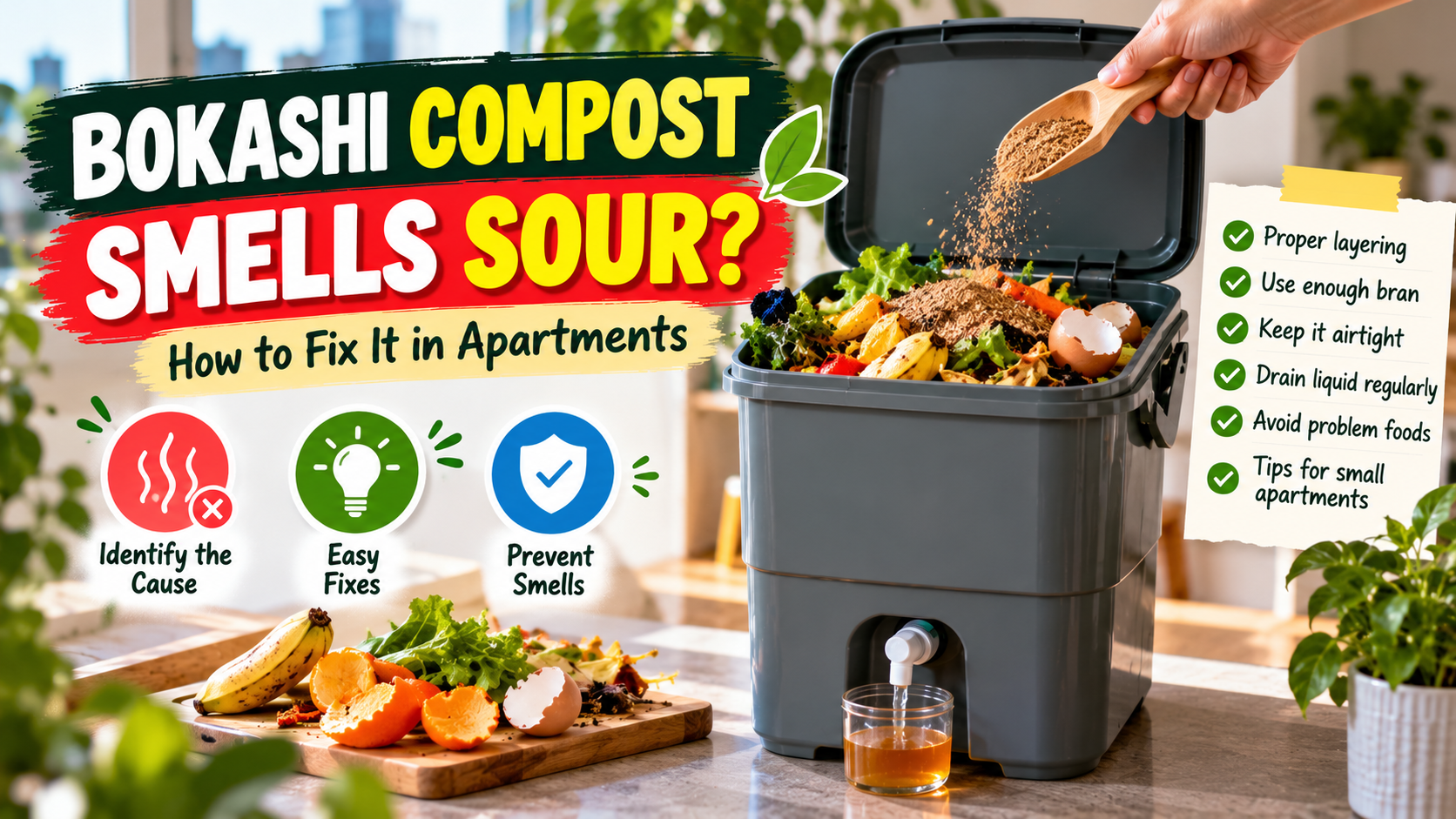
Bokashi Compost Smells Sour? How to Fix It in Apartments
Apartment composting · Troubleshooting guide
Bokashi Compost Smells Sour? How to Fix It in an Apartment
A tangy, vinegar-like smell can be normal in bokashi. Learn how to tell healthy fermentation from a problem—and how to deal with unpleasant odours without filling your apartment with the smell of food waste.
If your bokashi compost smells sour, do not panic. A mild acidic or pickled smell—similar to vinegar, sourdough or pickled vegetables—is usually a sign that fermentation is happening. Bokashi is designed to ferment kitchen scraps in a sealed, low-oxygen bucket, so it does not smell exactly like ordinary garden compost.
The important difference is the type and strength of the odour. A tangy, slightly sweet-sour smell that is noticeable when you open the bucket can be normal. A strong rotten, sewage-like, rancid or rotten-egg smell suggests the food may be rotting rather than fermenting properly. The Royal Horticultural Society explains this distinction in its guide to bokashi.
1. Is a sour bokashi smell normal?
Yes—within limits. Bokashi relies on beneficial microorganisms introduced through inoculated bran or a suitable bokashi starter. During fermentation, the food waste becomes acidic and can smell tangy, yeasty or like pickled vegetables. White fungal growth can also appear and is commonly considered a normal sign of fermentation, provided the bucket is otherwise behaving as expected.
Tangy or pickled
A mild vinegar-like, yeasty or sour smell when the lid is opened briefly. Scraps may still look recognisable, because bokashi is a fermentation stage rather than finished compost.
Rotten or putrid
A powerful sewage-like, rancid, rotten-egg or decay smell; especially when it persists after you correct moisture, bran and sealing problems.
The University of Saskatchewan’s indoor bokashi guide describes the expected smell as sour and beery, detectable mainly when the bucket is opened. A bucket that smells strongly bad while closed may have a sealing or fermentation problem.
2. How to fix a bad-smelling bokashi bucket
If the odour is unpleasant rather than simply sour, work through these steps. Keep the lid closed except when you need to make a correction, and avoid prolonged exposure to the contents.
- Drain collected liquid. If your bucket has a tap, drain the liquid that has accumulated at the bottom every few days, following the bucket maker’s instructions. A build-up of liquid can contribute to unpleasant smells. Avoid adding soups, drinks or large amounts of sauce to the bucket.
- Add fresh bokashi bran. Sprinkle inoculated bran over the exposed food layer according to the product instructions. If the batch smells noticeably rotten, the amount of starter may have been insufficient. Do not rely on plain flour or random kitchen ingredients as a substitute for proper inoculated bran.
- Press the scraps down. Use a clean plate or the tool supplied with the bucket to compact the food and remove air pockets. Cover the scraps with bran so fewer food surfaces are exposed to air.
- Check the lid and seals. Wipe food residue from the rim, inspect the gasket if your bucket has one, and close the lid firmly. Check for cracks or a loose drain tap. Bokashi fermentation works best when the system stays sealed.
- Reduce excess moisture. Let wet scraps drain before adding them, and avoid tipping in free liquids. If the bucket design allows it, check that the drainage tray and tap are not blocked. Follow the specific manufacturer’s instructions before adding any absorbent material.
- Review what went in. Do not add rotten or mouldy food to begin with. Cut large scraps into smaller pieces so they can be compacted and fermented more evenly. Avoid large volumes of oil, grease or liquid.
- Reassess the batch. If the smell returns to a mild sour or pickled odour, continue the normal sealed fermentation period. If it remains strongly putrid, or there is extensive black or green mould, the safer course is usually to discard the failed batch according to local waste rules, thoroughly clean the bucket and restart with fresh bran.
These corrections align with troubleshooting advice from the Arizona Department of Environmental Quality and the Brisbane City Council, both of which identify insufficient bran, poor sealing and excess liquid as common causes of bokashi odour problems.
3. Common causes of unpleasant bokashi smells
| What you notice | Possible cause | What to try |
|---|---|---|
| Strong rotten smell | Not enough inoculated bran, exposed scraps or failed fermentation | Add fresh bran, compact the layer and reseal. Discard the batch if the putrid odour persists. |
| Wet, sludgy scraps | Too much liquid or a blocked drain | Drain the collection chamber, check the tap and avoid adding free liquids. |
| Smell escapes while closed | Lid, gasket or tap may not be airtight | Clean the rim and check the lid, seals, tap and bucket for damage. |
| Green or black mould | Possible exposure to air or spoiled contents | For a small patch, some guides suggest correcting the seal and adding bran; extensive dark mould or a strong rotten smell is a reason to discard the batch. |
| Smell mainly from one food layer | Large pieces, very wet scraps or food already spoiled | Chop scraps smaller, drain them and avoid adding rotten food in future batches. |

4. How to keep bokashi odours under control in an apartment
In a small apartment, preventing smells is easier than treating a failed batch. You do not need a garden or a large outdoor compost heap to use a bokashi bucket, but you do need a plan for where the fermented scraps will go after the bucket stage.
- Choose a cool, shaded spot. Keep the bucket out of direct sunlight and away from ovens, radiators or other heat sources.
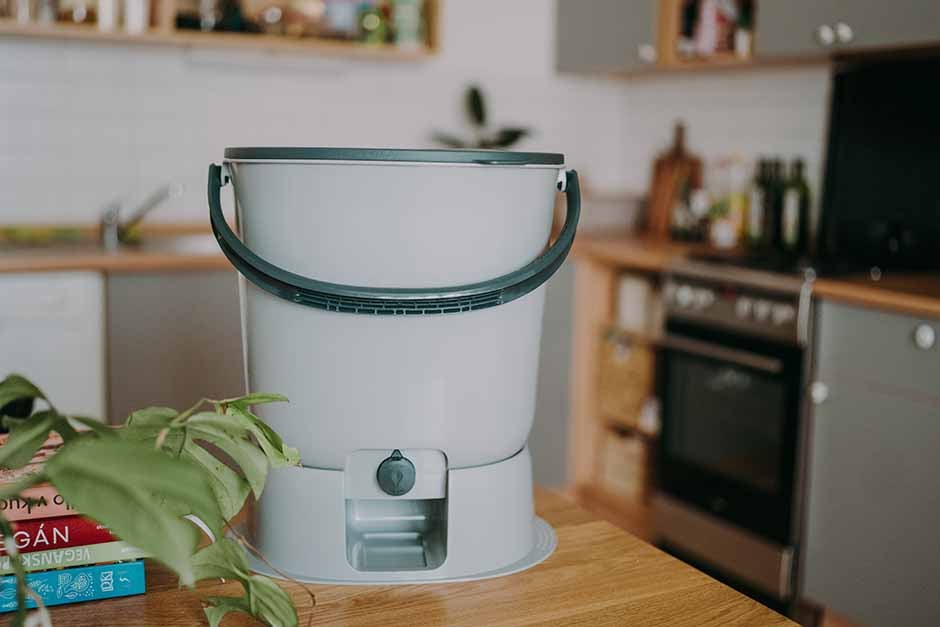
- Use a bucket that seals properly. A dedicated bokashi bucket with a tight lid and drainage tap is convenient for indoor use.
- Keep a routine. Open the lid only long enough to add scraps, add bran as directed and press the layer down. Close the lid immediately.
- Manage scraps before they enter the bucket. Drain wet leftovers, cut large scraps smaller and avoid adding food that has already spoiled.
- Have an end-use ready. When fermentation is complete, bokashi is still pre-compost. It needs further breakdown in soil, a suitable compost system or a community composting arrangement. If you cannot finish it at home, check whether a local community garden or food-waste collection accepts fermented scraps.
For indoor finishing, the University of Saskatchewan describes mixing fermented bokashi into a large tub with several inches of soil and covering it with more soil. The material is acidic at first, so keep it away from plant roots and allow time for it to break down before planting. Follow a reliable method and leave enough space for the container; do not keep an open tub of fresh fermented waste inside a living area.
5. What not to do when bokashi smells bad
- Do not add perfumes or essential oils. They mask the smell instead of fixing the fermentation problem.
- Do not add large amounts of water. Excess liquid can make odour management harder.
- Do not keep opening the lid to check it. Repeated exposure introduces air and releases odour into your apartment.
- Do not plant directly into fresh bokashi. The material is acidic and has not finished decomposing. Mix it with soil or add it to a suitable composting system, then allow it to mature.
- Do not assume all sour smells mean failure. A tangy, pickled smell is expected; the warning sign is a strong rotten or putrid odour.
Frequently asked questions
Why does my bokashi compost smell sour?
A mild sour, vinegary or yeasty smell is a normal part of bokashi fermentation. The process acidifies the food waste. If the odour is rotten, sewage-like or rancid rather than tangy, check the amount of bran, liquid build-up and airtight seal.
Should bokashi smell when the lid is closed?
Usually, very little odour should escape from a properly sealed bucket. If you smell it around the apartment while the lid is closed, check the lid gasket, rim, tap and bucket for leaks or residue.
Can I fix a rotten-smelling bokashi batch?
You may be able to correct an early problem by adding fresh inoculated bran, pressing the food down, draining excess liquid and making the bucket airtight again. If the batch remains strongly putrid or has extensive dark mould, discard it according to local waste rules, wash the bucket and restart.
Is white mould in bokashi bad?
White fungal growth is often normal during fermentation. Green or black mould can indicate that the process has been disturbed, especially when paired with a strong rotten smell. Correct minor issues promptly and discard a badly spoiled batch.
How often should I drain bokashi liquid?
Check the bucket every few days and drain the liquid according to the product instructions. Some buckets collect more liquid than others depending on the foods added. Avoid pouring excess soups or liquids into the bucket in the first place.
Can I keep a bokashi bucket in a small apartment?
Yes. A sealed bucket can be kept indoors in a convenient shaded location. The main consideration is planning where to finish the fermented scraps after the bucket stage, such as a suitable soil container, garden, compost system or community composting option.
Final thoughts
If your bokashi compost smells sour, that may mean it is working as intended. A mild, pickled smell is different from the powerful rotten odour associated with a failed batch. Focus on good habits: use fresh inoculated bran, compact the scraps, drain liquid regularly, avoid already-rotten food and keep the lid airtight.
These simple steps can make bokashi much easier to manage in a small apartment. If a batch remains strongly rotten after troubleshooting, do not try to mask the odour—discard it safely, clean the bucket and begin again.
Further reading
- Royal Horticultural Society: How to recycle food waste with bokashi
- University of Saskatchewan: Bokashi composting (indoor method)
- Arizona Department of Environmental Quality: Compost troubleshooting
- Brisbane City Council: Compost at home