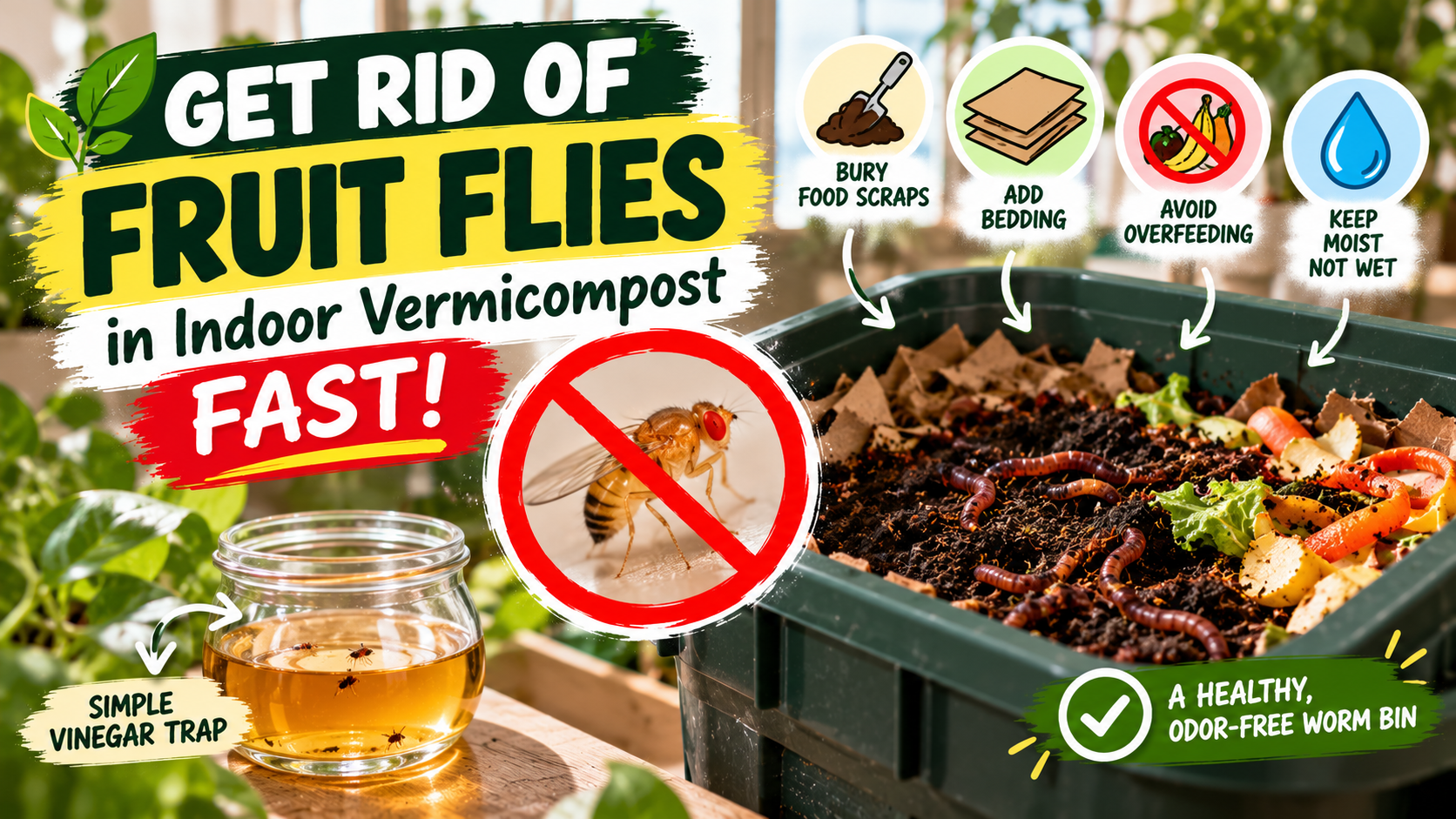
Get Rid of Fruit Flies in Indoor Vermicompost Fast
Indoor Composting · Quick Fix Guide
How to Get Rid of Fruit Flies in Indoor Vermicompost Fast
Tiny flies hovering around your worm bin can make indoor composting frustrating. The quickest solution is to remove exposed food, bury every fresh scrap under bedding, add a fresh dry layer on top, and trap the adult flies away from the worms. These steps tackle the breeding source instead of only chasing the flies you can see.

1. The fastest fixes to do today
For most indoor vermicompost bins, fruit flies gather because exposed or slowly decomposing food gives them a place to feed and reproduce. A vinegar trap can catch adults, but source control is what prevents more flies from emerging. University extension and government composting guides recommend burying food, avoiding overfeeding, and adding bedding to cover scraps. (Illinois Extension; U.S. EPA)
- Pause feeding temporarily. If you can still see yesterday’s food, wait until most of it has been eaten before adding more. Overfeeding leaves scraps available to flies and can cause unpleasant odours.
- Remove exposed or rotting scraps. Use a small scoop to take out clearly spoiled food sitting on the surface. Do not dig through the whole bin unnecessarily or remove healthy worms.
- Bury new food deeply. Make a small pocket in the bedding, add chopped scraps, and cover them completely. Add roughly 2–5 cm (1–2 inches) of bedding over the feeding spot, or enough that no food is exposed.
- Add fresh bedding on top. Use shredded plain cardboard, uncoated paper or newspaper. Keep the bedding moist like a wrung-out sponge—not soggy—so worms can still breathe and move through it.
- Trap the adults outside the bin. Put an apple-cider-vinegar trap or a sticky card close to the bin, out of reach of children and pets. Keep traps, soap and any pest products out of the worm bedding.
2. Check whether they are fruit flies or fungus gnats
Not every tiny fly around compost is a fruit fly. Identifying the pest helps you choose the right fix.
Fruit flies
Usually tan, yellowish or light brown, often with noticeable red or dark eyes. They tend to hover around fermenting fruit, food scraps, kitchen bins and the worm bin’s feeding spots.
Best response: Remove exposed food, cover scraps with bedding, freeze scraps before adding them, and use a vinegar trap nearby.
Fungus gnats
Usually darker, slender and mosquito-like, with long legs and antennae. They may gather around very moist bedding, potting mix and houseplants as well as the worm bin.
Best response: Check whether the bedding is too wet, remove the top layer if larvae are concentrated there, replace it with fresh bedding, and check nearby houseplants.
If you are not sure, start with the low-risk steps that help both: remove breeding material, avoid overfeeding, keep the bin properly moist rather than waterlogged, and improve housekeeping around the container. The University of Saskatchewan’s vermicomposting guide distinguishes fruit flies from fungus gnats and suggests different controls. (University of Saskatchewan)
3. Set a simple fruit fly trap near the worm bin

A vinegar trap can reduce the number of adult fruit flies in the room, but it will not solve an infestation if scraps remain exposed in the bin.
Vinegar trap steps
- Pour a small amount of apple cider vinegar into a glass or jar.
- Add one small drop of dish soap to help flies sink when they land on the liquid.
- Place it next to the worm bin or the fruit bowl, where flies are gathering.
- Refresh it regularly and keep it where children and pets cannot spill it.
Alternatively, use a commercially made fruit fly trap or a sticky card placed beside the bin. Do not spray insecticide into the worm bin: it can harm the worms and the organisms that make composting work.
4. Prevent fruit flies from returning
Freeze scraps before feeding
Fruit fly eggs may already be present on produce before it reaches your kitchen. Store scraps in a sealed container in the freezer until you are ready to feed the worms. Thaw them as needed, and bury them beneath bedding. Freezing scraps is recommended in several vermicomposting guides as a way to reduce the chance of introducing flies. (Utah State University Extension)
Feed less, and feed in one small pocket
New worm bins and small worm populations may not be able to process a lot of food at once. Start with a modest amount, chop scraps into smaller pieces, and wait until most of the previous feeding has disappeared before adding more. Move the feeding pocket around the bin rather than piling food on top.
Keep a useful bedding layer
Maintain a good supply of shredded, uncoated cardboard or paper. Add enough bedding to cover each feeding spot and replenish it as it breaks down. Bedding should feel like a wrung-out sponge; if it is dripping wet, add dry bedding and check the drainage and airflow.
Keep the bin covered but ventilated
Use the lid or cover recommended for your worm-bin design, while ensuring the bin still has suitable ventilation. Do not seal a bin airtight if it relies on air holes. Wipe up spilled leachate, clean the food-scrap collection container, and keep ripe fruit and kitchen rubbish covered nearby.
Avoid chronic overfeeding
Large amounts of uneaten food—especially soft fruit—can attract flies and create odours. Remove food that has turned foul or remains uneaten for a long time. Do not add meat, dairy, greasy leftovers or oily foods to a typical indoor worm bin.
5. Mistakes that can make the problem worse
| Common mistake | Better approach |
|---|---|
| Leaving fruit scraps exposed | Bury every feeding and cover it with bedding. |
| Adding more food while old scraps remain | Pause feeding until the worms have processed most of the previous meal. |
| Pouring vinegar or dish soap into the bin | Use the mixture only in a separate trap outside the bedding. |
| Spraying pesticide into the worm bin | Avoid pesticides; protect worms and use source control plus traps. |
| Making the bedding soggy | Add dry paper bedding and check drainage; aim for wrung-out-sponge moisture. |
| Using a vinegar trap without fixing the source | Remove exposed food, refresh bedding and clean nearby scraps and spills. |
Quick checklist for tonight
- ☐ Pause feeding if scraps are still uneaten.
- ☐ Remove food scraps exposed on the surface.
- ☐ Cover existing feeding spots with fresh bedding.
- ☐ Place a vinegar trap or sticky card beside the bin—not in it.
- ☐ Wipe up kitchen spills and cover the fruit bowl.
- ☐ Freeze future scraps until feeding time.
Frequently asked questions
How do I get rid of fruit flies in indoor vermicompost fast?
Stop adding food if old scraps remain, remove exposed or spoiled food, cover all scraps with a fresh layer of bedding, and place a vinegar trap or sticky card nearby. Continue removing the food source rather than relying on traps alone.
Will fruit flies harm my compost worms?
Fruit flies are mainly a nuisance, not usually a direct threat to the worms. However, exposed food, overfeeding and excess moisture can signal a bin-management problem, so correct those conditions.
Can I pour apple cider vinegar into the worm bin?
No. Keep vinegar and dish soap in a separate trap outside the bedding. Adding them directly can disturb the bin environment and may harm worms or other beneficial organisms.
Should I stop feeding my worms until the flies disappear?
If food is still uneaten, pause feeding for several days and let the worms catch up. Once most of the scraps are gone, resume with a smaller amount buried under bedding.
Why are tiny black flies coming from my worm bin?
They may be fungus gnats rather than fruit flies, particularly if they are dark and slender or if the bedding is very wet. Check the top bedding layer and nearby houseplants, reduce excess moisture, and replace the upper layer if needed.
Can I use insect spray around an indoor worm bin?
Avoid spraying the bin or its bedding. Use physical traps placed out of reach, remove breeding sources, and keep the worm habitat free of pesticides and cleaning products.
Keep indoor composting simple
A fruit fly problem is usually manageable when you remove exposed food, provide fresh bedding and avoid overfeeding. Make these small changes part of your routine to keep your worm bin more comfortable indoors.
More helpful guides: Explore other sustainable living and home gardening articles on Before We Sleep.
Sources and further reading
- University of Illinois Extension — Vermicomposting Questions and Answers
- U.S. Environmental Protection Agency — Indoor Worm Composting
- University of Maryland Extension — Indoor Worm Composting
- University of Saskatchewan — Vermicomposting
- Utah State University Extension — Vermicomposting
This article provides general home-composting guidance. Follow the care instructions for your specific worm-bin system and avoid pesticide use in the worm habitat.
↑ Back to top