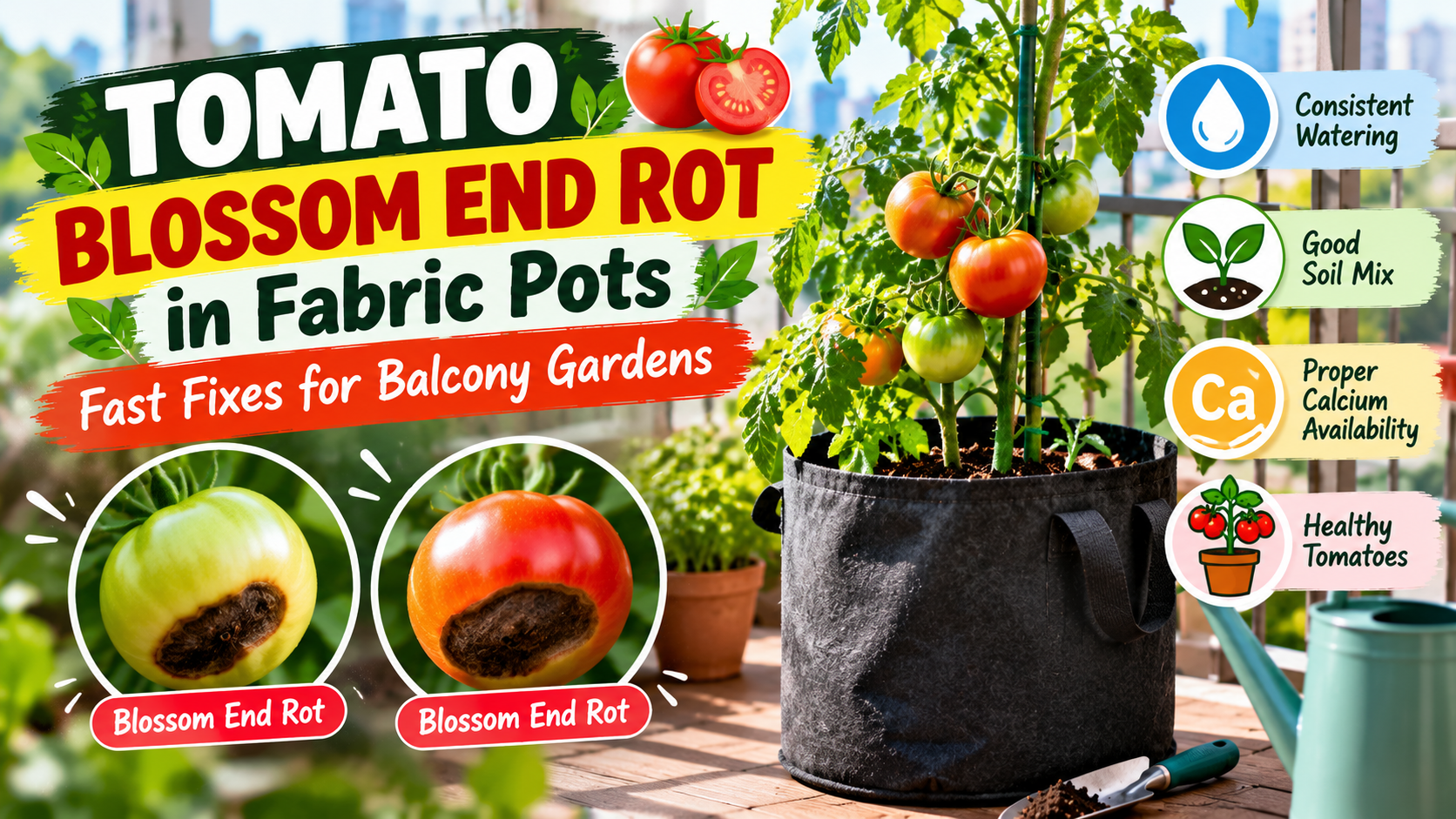
Tomato Blossom End Rot in Fabric Pots: Fast Fixes
Tomato Blossom End Rot in Fabric Pots: Fast Fixes for Balcony Gardens
Found a dark, sunken patch on the bottom of your balcony tomato? Blossom-end rot is frustrating, but it does not automatically mean the whole plant is lost. Here is what to do today—and how to protect the next tomatoes growing in your fabric pots.

Fast fix: what to do first
- Remove badly affected tomatoes. The damaged area will not heal, and removing affected fruit helps you focus on preventing damage to later fruit.
- Check moisture at root level. If the mix is dry a few centimetres down, water slowly until the entire root zone is moist and excess water drains from the bottom.
- Check fabric pots every day during hot, sunny weather. Fabric allows air to move through the sides, which can make the mix dry faster than in many plastic containers.
- Pause heavy feeding. Avoid adding extra high-nitrogen fertiliser or several calcium products at once.
- Keep moisture steady. Add a thin layer of suitable mulch over the potting mix, leaving a little space around the stem.
Important: Blossom-end rot is linked to inadequate calcium reaching the developing fruit, often because water uptake fluctuates. Adding more calcium is not always the answer if the mix already contains enough.
How to Identify Blossom-End Rot on Tomatoes
Blossom-end rot typically begins as a small, watery-looking or pale-brown patch at the blossom end—the end opposite the green stem. As the tomato grows, the spot can become dark brown or black, sunken and leathery. It most often affects developing fruit rather than starting as a problem on the leaves.
This is a physiological disorder, not a contagious plant disease. It does not spread from one tomato plant to another. However, several fruit on the same plant can be affected when water uptake or calcium availability remains unstable.
Why Balcony Tomatoes in Fabric Pots Get Blossom-End Rot
Tomatoes need calcium to build healthy fruit tissue. When the developing fruit receives too little calcium, its cells break down and a sunken lesion appears. Even when calcium is present in the potting mix, the plant may not move enough of it into the fruit if water uptake is interrupted.
1. Fabric pots can dry out quickly
Fabric grow bags allow air and water to pass through their sides. That is useful for root health, but a small bag on a warm balcony may lose moisture quickly—especially in direct afternoon sun, windy conditions or hot weather. The top of the mix can also look moist while the root ball deeper down is dry.
2. The potting mix repeatedly dries and gets soaked
A cycle of drying out completely and then receiving a large amount of water can interrupt calcium movement to the fruit. The goal is not to keep the pot permanently wet. It is to maintain even moisture while allowing excess water to drain freely.
3. Too much fertiliser can make matters worse
Excess nitrogen can encourage rapid leafy growth and contribute to blossom-end rot. High concentrations of certain nutrients or salts can also interfere with calcium uptake. Follow the label rate for a tomato fertiliser rather than adding extra feed in response to every damaged fruit.
4. The growing mix may have low calcium or unsuitable pH
Some container mixes may not supply a balanced nutrient level, but a calcium shortage should not be assumed from the fruit symptom alone. Watering problems are common, and adding amendments without checking the mix can create further imbalance.
Step-by-Step: The Fast Fix for Balcony Tomatoes
- Remove fruit with substantial damage.
Pick tomatoes with large, dark, sunken lesions and discard them. The lesion will not turn back into healthy tomato tissue. - Test the root-zone moisture.
Push a finger a few centimetres into the mix, not just the surface. You can also lift one side of the bag slightly to learn how heavy it feels after watering versus when dry. - Rehydrate slowly if the mix is dry.
Water at the soil surface in two or three passes, allowing the water to soak in between passes. If water races down the sides while the centre remains dry, continue gently and check moisture deeper in the root ball. - Confirm drainage.
Make sure drainage is unobstructed and the bag is not sitting in standing water. A saucer can protect the balcony, but empty it after watering so the roots are not kept saturated. - Reduce rapid moisture loss.
Add a thin layer of clean organic mulch to the surface of the mix, keep it away from the stem, and move the bag out of extreme reflected heat if possible without depriving the tomato of needed light. - Review feeding and calcium only after the basics.
Pause extra fertiliser applications. If symptoms continue on later fruit despite consistent moisture, check the product label, growing-mix guidance and—where practical—pH or nutrient test results before adding calcium.
When will improvement show? Existing affected fruit cannot recover. The practical sign that your changes are working is that newly developing tomatoes form without fresh lesions. Monitor the next fruit over the coming days and weeks.
How to Water Tomatoes in Fabric Grow Bags

There is no single watering schedule that works for every balcony. Bag size, potting mix, plant size, direct sunlight, wind, temperature and rainfall all affect how quickly the root zone dries.
- Check daily during warm weather. Check more than once on very hot, windy days or when the plant is large and full of fruit.
- Water the mix, not just the leaves. Apply water around the root zone, avoiding a quick splash that only wets the surface.
- Water thoroughly when needed. Aim to moisten the full root ball, with excess water able to escape through the bottom and sides.
- Use the morning as your routine check. Water then if the mix needs it. Recheck later in high heat; do not automatically give a second watering if the mix is still adequately moist.
- Use mulch and a larger bag when suitable. A larger volume of mix generally buffers moisture changes better than a small bag, provided the balcony can safely support the added weight.
- Shield pots from extreme heat thoughtfully. Keep the root zone from overheating, but make sure the tomato still receives the light it needs for healthy growth and fruiting.
Do not follow a rigid “water every day” rule without checking the mix. Constantly saturated compost can deprive roots of oxygen and create other problems. Adjust to actual conditions.
Should You Add Calcium to Fix Blossom-End Rot?
Not automatically. Blossom-end rot looks like a calcium problem in the fruit, but inconsistent moisture can prevent the plant from delivering calcium properly even when the mix contains it. Fix watering first.
- Calcium sprays: Foliar calcium sprays are not a reliable rescue for fruit that already has rot. Calcium moves poorly from leaves into fruit, so do not depend on spraying as the main solution.
- Crushed eggshells: Eggshells break down slowly and are not a fast treatment for an actively fruiting tomato plant.
- Gypsum or lime: These are not interchangeable. Their suitability depends on the mix and pH; lime raises pH, while gypsum generally supplies calcium without the same pH-raising effect. Do not add them blindly to a container.
- Tomato fertiliser: Use a complete product suitable for container tomatoes, at the labelled rate. Avoid repeated extra feeding to compensate for damaged fruit.
If new fruit continues to develop blossom-end rot after you have stabilised watering, check your growing medium’s nutrient content and pH if possible, or ask a local horticulture supplier or extension service for advice on a container-safe calcium amendment.
Prevent Blossom-End Rot on the Next Tomatoes
| Habit | Why it helps |
|---|---|
| Check fabric pots daily in warm weather | Helps catch drying before the root ball becomes severely dry. |
| Water slowly and thoroughly when needed | Encourages water to reach the full root zone instead of just the surface. |
| Keep drainage clear | Prevents roots from remaining waterlogged after watering. |
| Apply a thin mulch layer | Reduces rapid moisture loss from the surface of the potting mix. |
| Use balanced, label-rate fertiliser | Avoids excessive nitrogen or nutrient salts that can interfere with calcium uptake. |
| Choose an appropriately sized grow bag | A larger root volume usually provides a more stable moisture buffer than a very small container. |
| Track weather and balcony exposure | Hot sun, reflected heat and wind may mean you need to check moisture more often. |
If you are choosing plants for a small balcony, consider compact or determinate tomato varieties suited to containers, and use a stable support. Keep in mind that variety choice may affect susceptibility, but steady root-zone moisture remains an important part of prevention.
Your balcony tomato rescue checklist
Remove damaged fruit, check moisture below the surface, rehydrate dry mix slowly, make sure excess water drains, and avoid extra fertiliser or calcium unless there is a clear reason. Repeat the moisture check daily while fruit is developing.
Frequently Asked Questions
Can I save a tomato that already has blossom-end rot?
The damaged tissue will not heal. Remove fruit with substantial lesions and focus on stable watering so later fruit has a better chance of developing normally.
Does blossom-end rot mean my fabric pot has no calcium?
Not necessarily. The disorder is caused by too little calcium reaching the developing fruit, and irregular soil moisture can interrupt calcium uptake even if calcium is present in the mix.
How often should I water tomatoes in fabric pots?
Check the mix daily in warm or windy weather, and more often during extreme heat. Water when the root zone needs it, thoroughly enough to wet the root ball, and allow excess water to drain. Avoid both severe drying and constant saturation.
Will eggshells or milk fix blossom-end rot quickly?
No quick fix is guaranteed. Eggshell calcium releases slowly, and household remedies are not a reliable way to reverse fruit damage. Stabilise watering first and check whether a calcium amendment is actually needed.
Will calcium spray fix the black spot?
No. Calcium sprays cannot repair tissue that has already developed blossom-end rot and are not a dependable substitute for even moisture. Prioritise watering and balanced nutrition.
Is blossom-end rot contagious?
No. It is a physiological disorder, not a contagious disease. More than one fruit can develop it if the growing conditions continue to disrupt calcium movement.
Can I still eat a tomato with blossom-end rot?
For home gardening, the cautious choice is to discard fruit with a substantial, dark, sunken or deteriorating lesion, especially if there are signs of secondary decay or mould. Do not eat fruit that is mouldy or otherwise spoiled.
Final Thoughts
When balcony tomatoes develop blossom-end rot in fabric pots, the most useful fast fix is usually better moisture management—not an immediate dose of calcium. Remove damaged fruit, make sure water reaches the full root ball, maintain drainage, reduce rapid evaporation and avoid excessive fertiliser. If fresh fruit still develops the problem, investigate the growing mix and nutrient balance before applying amendments.
Further Reading and Sources
- Royal Horticultural Society: Blossom end rot — signs, watering and prevention.
- University of Illinois Extension: Tomato gardeners beware — container watering, fertiliser and calcium advice.
- UC Statewide IPM Program: Blossom end rot — moisture, salt and nutrient balance.
- University of Maryland Extension: Blossom-end rot on vegetables — symptoms and management.
Gardening conditions vary by climate, container mix and plant variety. If the problem persists despite consistent watering, seek advice based on your specific potting mix and fertiliser.