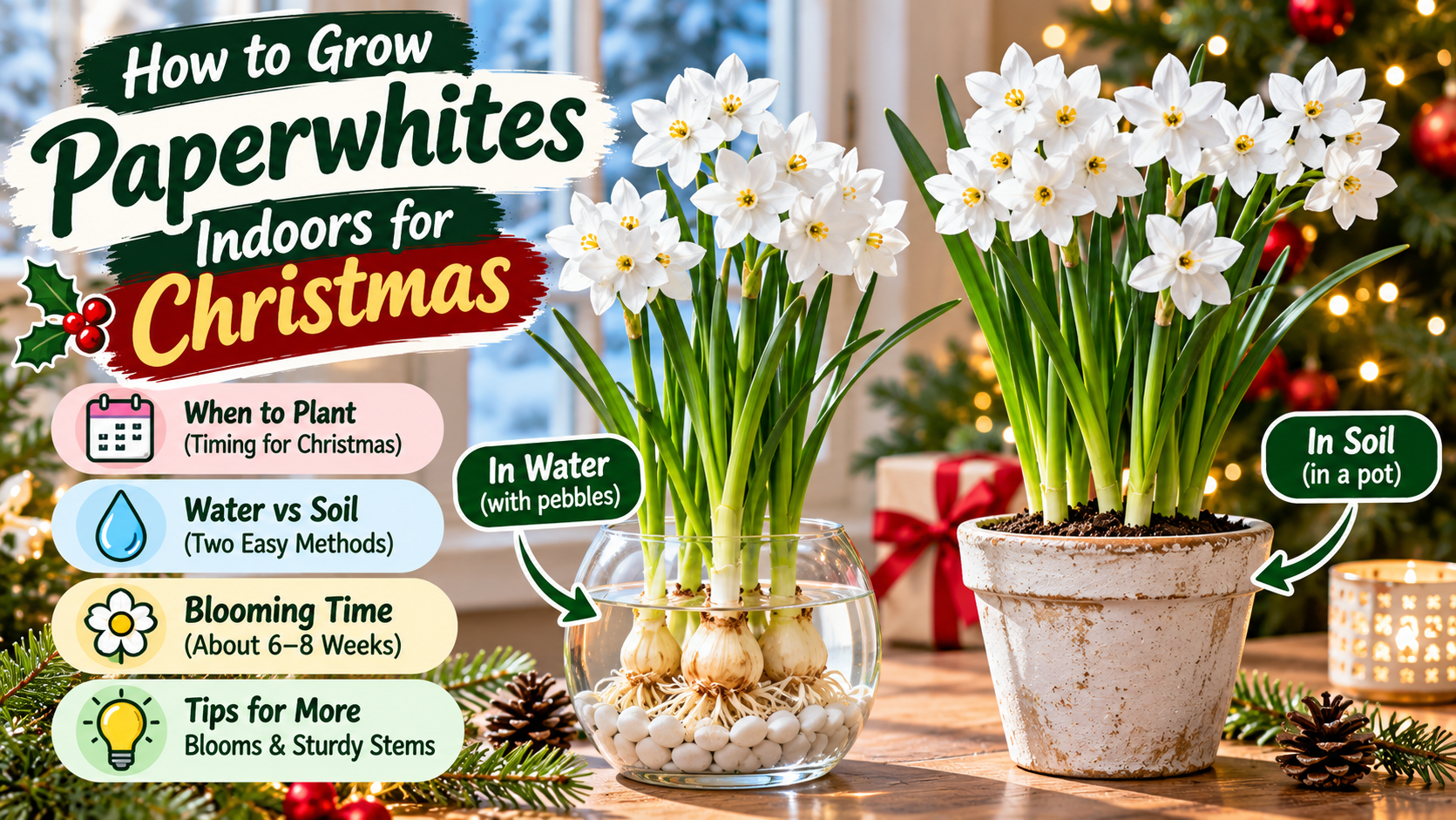
Grow Paperwhites Indoors for Christmas: Planting & Bloom Time
How to Grow Paperwhites Indoors for Christmas: When to Plant, Water vs Soil & Blooming Time
Paperwhite narcissus can fill your home with clusters of fragrant white flowers during the festive season. Learn when to start the bulbs, how to grow them in pebbles or potting mix, and how long they take to bloom.

Few indoor flowers feel as festive as paperwhites. Their slender green leaves, delicate white blooms and sweet fragrance make them a favourite for winter windowsills, dining tables and Christmas decorations. The best part? Unlike many spring bulbs, paperwhites do not need a long artificial cold period before flowering.
You can grow them in a decorative glass bowl with stones and water or plant them in a pot of soil. Both methods work, but they need slightly different care. Getting the planting date and water level right is the key to enjoying flowers around Christmas rather than several weeks too early or too late.
What are paperwhites?
Paperwhites are a fragrant type of narcissus, usually sold as Narcissus papyraceus or paperwhite narcissus. They produce clusters of small white flowers on upright stems and are commonly grown indoors during autumn and winter.
Unlike tulips, hyacinths and many other bulbs that need a sustained chilling period to flower indoors, paperwhites can be forced without pre-chilling. This makes them one of the easiest bulbs for a Christmas display. Popular varieties include ‘Ziva’, ‘Galilee’ and ‘Nir’. Some cultivars take longer than others; Iowa State University notes that ‘Grand Soleil d’Or’ can take one to two weeks longer to force than other paperwhites.
When should you plant paperwhites for Christmas?
Work backwards from the date you want the flowers to open. Paperwhites commonly take around four to eight weeks to flower indoors, although some guidance gives a wider six-to-ten-week window depending on the variety, temperature and growing method. The Royal Horticultural Society recommends planting paperwhite narcissus in September for Christmas flowering in the UK.
For a Christmas Day display on 25 December, a useful planning window is approximately mid-October to early November. Starting earlier gives you more time and reduces the risk of late flowers. If you are reading this after that window, plant as soon as you can, choose a quick-forcing variety and understand that the blooms may arrive after Christmas.
Want flowers over several weeks?
Plant a small batch every 7–14 days rather than starting every bulb at once. Successive plantings can give you a longer run of flowers for the holidays and the weeks afterwards. Keep a label on each bowl with its planting date and variety.
Do paperwhites need chilling? No. Paperwhites do not require the cold-storage treatment needed by many tulips or hyacinths. A cool, dim rooting period after planting is often recommended to encourage roots and sturdier growth, but it is not the same as a mandatory chilling requirement.
Growing paperwhites in water vs soil: which is better?
Both methods can produce beautiful flowers. Choose water and pebbles if you want to see the roots and create a simple table display. Choose soil if you prefer a more traditional pot, want to keep moisture more evenly buffered, or need a container with drainage.
Water + pebbles
Advantages: Attractive in clear glass, easy to monitor root growth, no potting mix required.
Watch out: The bulb base should only touch the water. If the bulb sits in water, it can rot.
Potting mix / soil
Advantages: Stable support, familiar watering routine and less risk of accidentally submerging the bulb.
Watch out: Use a free-draining mix and a pot with drainage holes. Soggy compost can also cause rot.
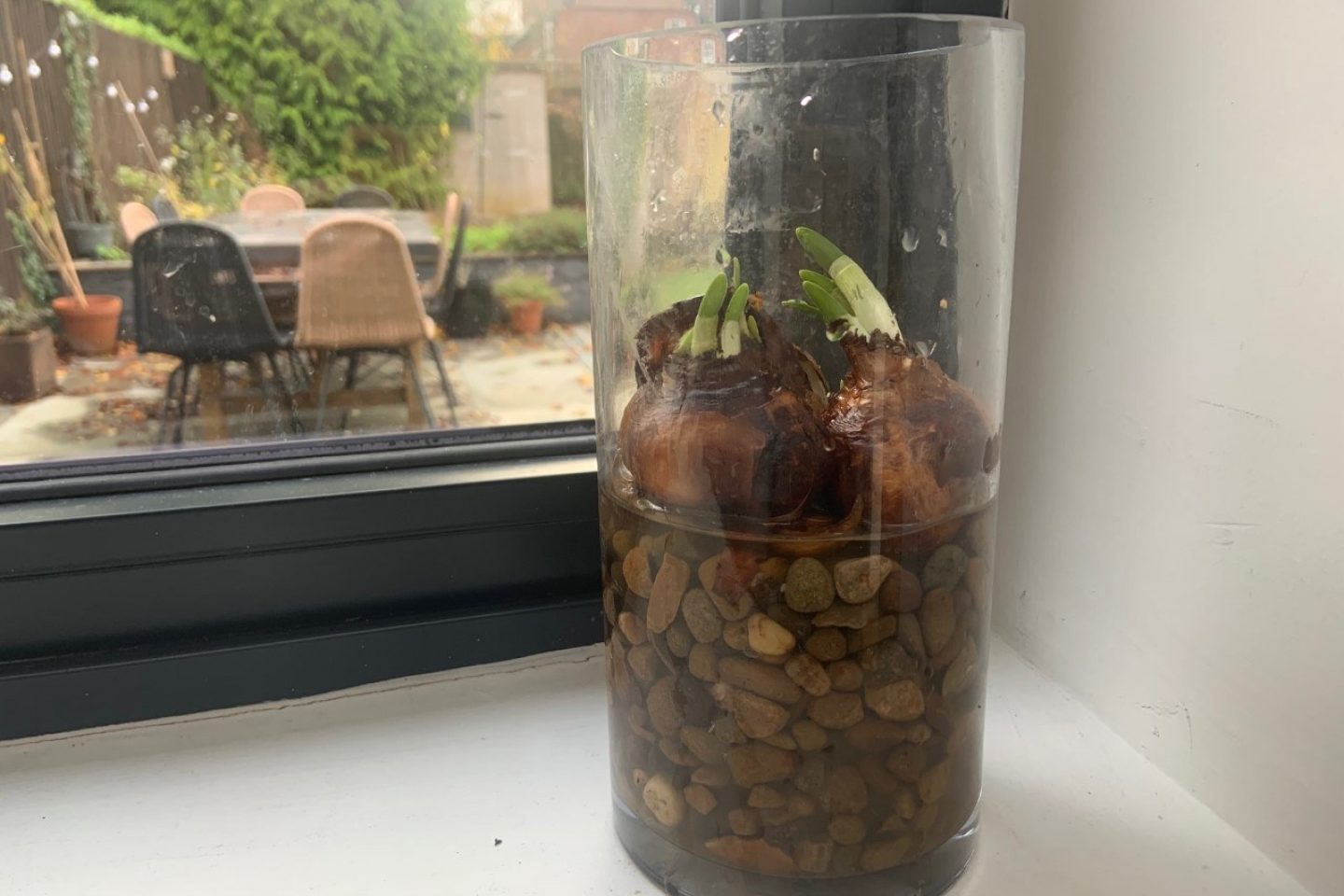
How to grow paperwhites in water and pebbles
This is the classic no-soil method. Use a shallow, stable bowl or a glass forcing vase with enough width to hold the bulbs upright.
- Choose a container. Select a watertight bowl or glass vase. A shallow bowl about 5–8 cm (2–3 inches) deep works well.
- Add clean stones. Rinse pebbles, gravel or decorative glass stones and add a layer to the bottom of the container.
- Position the bulbs. Set each bulb broad base down and pointed tip upwards. Nestle them into the stones so they stand upright. They can sit close together, but avoid crushing them against one another.
- Add more pebbles for support. Fill around the lower portion of the bulbs, leaving the top and neck exposed.
- Add water carefully. Raise the water only until it just touches the bottom of the bulbs. Do not cover the bulb itself. Once roots grow down into the water, keep the level slightly below the bulb bases.
- Check the water level. Top up as needed and refresh it if it becomes cloudy or smells unpleasant. Do not let the bulb sit submerged.
The most important water-growing rule
Keep the water in contact with the roots, not the body of the bulb. Too much water around the bulb can encourage rot. This is the most common avoidable mistake when forcing paperwhites in a bowl.
How to grow paperwhites in soil
Growing paperwhites in potting mix is straightforward and gives the stems a little more support. Use a pot with drainage holes and a fresh, free-draining indoor potting mix or bulb fibre.
- Prepare the pot. Choose a container deep enough to hold the bulbs and roots, with drainage holes at the bottom.
- Add potting mix. Fill the lower part of the pot with a free-draining mix and lightly firm it.
- Place bulbs point-up. Arrange the bulbs close together for a full display, leaving a little space so they are not pressed tightly together.
- Cover the lower bulb. Add mix around the bulbs while leaving their tips or noses exposed above the surface.
- Water thoroughly once. Water until the mix is evenly moist and excess water drains away. Empty the saucer.
- Maintain even moisture. Check the mix regularly. Keep it lightly moist, not saturated or bone dry.
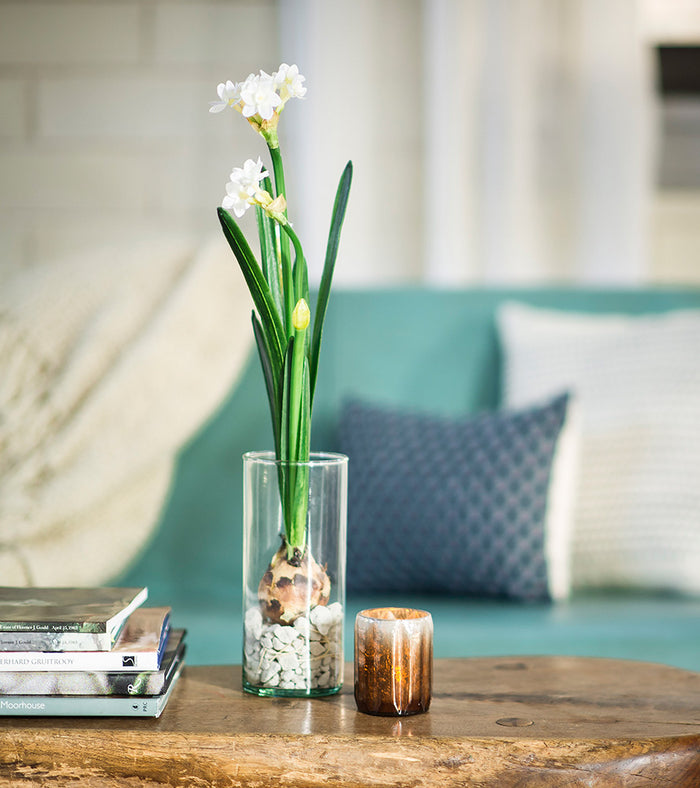
Paperwhite care: light, temperature, water and blooming time
Start with a cool rooting phase
After planting, many growers place the container in a cool, dim location for about two to three weeks to encourage root growth. Iowa State University gives a guide of around 7–10°C (45–50°F) for this stage. Check the bulbs weekly and keep the water or potting mix at the correct level. Paperwhites do not need a prolonged cold treatment like tulips; this is simply a useful way to establish roots before strong top growth.
Move into a bright place when shoots appear
When shoots are around 7–8 cm (about 3 inches) tall and roots are established, move the container to a bright window. A moderately cool room is better than a hot spot beside a radiator or heater. A temperature around 16–21°C (60–70°F) is a useful indoor target cited by Iowa State University.
How long do paperwhites take to bloom?
Plan on roughly four to eight weeks from planting to flowers in many home conditions. Some bulbs may flower in three to four weeks in favourable conditions, while cooler rooms, slower cultivars or less favourable light can extend the wait. The ‘Grand Soleil d’Or’ variety may take one to two weeks longer than many other paperwhites.
Keep the display fresh
- Rotate the container every few days if shoots lean strongly towards the window.
- Keep water-grown bulbs at the correct level; in soil, water when the top layer begins to dry.
- Once flowers open, move the display away from hot radiators and intense direct sun to help the blooms last longer.
- Use a small plant support or decorative twig if stems become tall and top-heavy.
Why are my paperwhites tall and floppy?
Paperwhites can naturally grow tall, and warm rooms or low light can make stems stretch and lean. This is especially noticeable when bulbs are grown in water because the roots provide less anchorage than potting mix.
To reduce flopping, give the plants bright light once shoots emerge, avoid placing them in very warm rooms, rotate the bowl regularly and group bulbs closely enough to support one another without overcrowding. A discreet stake or a loose ribbon can support a display that is already leaning.
What should you do with paperwhite bulbs after flowering?
Indoor-forced paperwhite bulbs use much of their stored energy to produce leaves and flowers. Do not expect every forced bulb to bloom well again straight away. Some gardeners compost spent bulbs, while in mild climates suitable paperwhite narcissus may be planted outdoors; they are not reliably winter-hardy in colder areas such as much of the UK.
If you want to try keeping them, allow the leaves to remain until they yellow naturally so the bulb can replenish some energy. Do not cut green foliage off immediately after flowering. Whether the bulb can be saved depends on its condition and your local climate, and repeat flowering is not guaranteed.
Common paperwhite growing problems and fixes
| Problem | Likely reason | What to do |
|---|---|---|
| Bulb becomes soft or smells rotten | Bulb base submerged or growing medium too wet | Remove affected bulb; lower water level or improve drainage. Keep water below the bulb body. |
| Leaves grow but no flowers | Bulb quality, cultivar or growing conditions | Use firm, healthy bulbs sold for indoor forcing; keep a steady, bright and moderately cool position. |
| Stems flop over | Warm conditions, insufficient light or naturally tall growth | Move to a brighter, cooler spot, rotate containers and add support if needed. |
| Flowers open too early | Planting started too far ahead or room is warm | Keep later batches cooler to slow development; stagger future plantings. |
| Flowers miss Christmas | Bulbs planted too late or a slow cultivar | Plant earlier next season, allow a 6–10 week window and check variety-specific timing. |
Safety note
Narcissus bulbs are poisonous if eaten and can cause stomach upset. Keep bulbs, stones and growing containers away from young children and pets, and wash your hands after handling bulbs. Do not mistake paperwhite bulbs for edible onions or garlic; keep them clearly labelled.
Frequently asked questions
Can I grow paperwhites indoors without soil?
Yes. Paperwhites can be grown in a shallow bowl of washed pebbles or gravel. Set the bulbs on top and keep the water level just touching their bases, not covering the bulbs.
Do paperwhite bulbs need to be chilled before planting?
No. Paperwhites are among the narcissus bulbs that can be forced indoors without a pre-chilling period. A short cool, dim rooting phase after planting can still help establish roots and manage growth.
How long do paperwhites take to bloom indoors?
Many paperwhite bulbs flower in about four to eight weeks, but timing varies with cultivar, temperature, light and growing method. Some can bloom in around three to four weeks in favourable conditions.
When should I plant paperwhites for Christmas Day?
Count back roughly six to ten weeks from 25 December. In the Northern Hemisphere, autumn planting—often September through early November depending on the source, variety and conditions—gives the best chance of Christmas flowers.
Should paperwhite bulbs be completely covered with water?
No. In a pebble bowl, the water should only just touch the bottom of the bulb. Once roots develop, keep the water slightly below the bulb base. Submerging the bulb can cause rot.
Can paperwhites bloom again next year?
Do not count on a forced paperwhite bulb flowering well again indoors. Forcing uses stored energy. In suitable mild climates, you can try planting the bulb outdoors after the foliage has naturally died back, but results vary.
Are paperwhites the same as regular daffodils?
Paperwhites are a type of narcissus, but they are usually grown for their fragrant clusters of small white flowers and their ability to bloom indoors without a long chilling period.
Final thoughts
Growing paperwhites indoors is a simple way to bring fresh flowers and fragrance into your home for Christmas. Start with firm bulbs, plant them early enough for your target date, and choose the method that suits your display: pebbles and water for a clear decorative bowl, or a free-draining potting mix for a more stable pot.
Most importantly, keep the bulb itself out of standing water, provide a bright and reasonably cool place as shoots develop, and allow for differences between varieties. A little planning—and a second bowl planted a week or two later—can give you beautiful paperwhite flowers through the festive season.
Sources and further reading
- Royal Horticultural Society – Bulbs for Christmas flowering
- Iowa State University Extension – Forcing Paperwhite Narcissus Bulbs
- Iowa State University Extension – How do you force paperwhite narcissus?
- Clemson Cooperative Extension – Forcing Bulbs Indoors
- University of California Agriculture and Natural Resources – Paperwhite bloom timing
Growing times are estimates, not guarantees. Variety, bulb quality, light and room temperature all affect flowering. The image URLs in this article are external references; confirm reuse rights with the image owner or replace them with your own or appropriately licensed photographs before publishing.